Why Building Code Isn’t Enough — And Why We’re Pursuing HomeStar and Passive House (PassivHaus)
Recently, I officially passed the HomeStar Assessor assessment and am now a certified HomeStar Assessor. While that’s an important step, I don’t see it as the finish line.
The assessment itself was an open-book, multi-choice test — useful for understanding the framework, but not something that, on its own, makes me feel truly ‘certified’. The real learning begins when theory is applied to a real project.
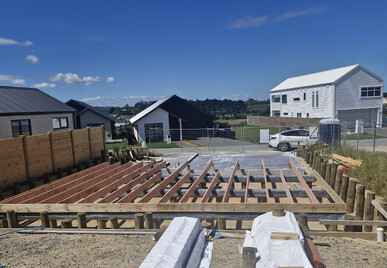
That’s why I’m excited (and nervous) to be working on our own home for HomeStar submission and work through the process properly. We’re aiming high — HomeStar 9 or 10 — while also pursuing Passive House certification, which will certify David as Passive House qualified.
Why Passive House Matters to Us
Passive House is fundamentally about performance. It sets clear, measurable limits on energy use, airtightness, and heating and cooling demand, all while prioritising thermal comfort and indoor air quality.
A Passive House–certified home maintains stable temperatures year-round, delivers consistently good indoor air quality through controlled ventilation, and dramatically reduces the energy required to live comfortably.
What Passive House doesn’t assess is the wider environmental context — things like embodied carbon, water use, or landscaping. That narrow focus isn’t a weakness; it’s what makes Passive House such a powerful performance benchmark.
For us, Passive House defines how well our home must perform.
Why HomeStar Complements Passive House
HomeStar is New Zealand’s residential sustainability rating system, and this is where the lens widens beyond pure building performance.
Importantly, Passive House does address home orientation, thermal comfort, and indoor environmental quality in a very rigorous way. It is exceptional at ensuring a home is healthy, comfortable, and efficient to live in.
A large proportion of HomeStar credits are still dedicated to how efficient, comfortable, and healthy a home is to live in — including thermal performance, energy use, ventilation, and overall occupant wellbeing. In that sense, HomeStar and Passive House share many aligned principles.
Where HomeStar extends the conversation is by also assessing:
Waste management during construction
Responsible material selection and reduced carbon emissions
Water efficiency and conservation
Landscaping and planting outcomes
Distance to sustainable transport links
Innovation credits that encourage better outcomes for occupants and the environment
This broader scope is one of the reasons we actively want to support HomeStar becoming more widespread. The more homes that carry a HomeStar rating, the easier it becomes for purchasers and renters to differentiate between homes that are genuinely efficient and healthy — and those that simply meet minimum code.
We see HomeStar as a powerful transparency tool. It helps shift the conversation away from assumptions and toward evidence, giving people clearer insight into what they are actually buying or living in.
Why Certification Matters
Saying a home is “based on” Passive House principles or “equivalent to” a HomeStar rating is largely meaningless unless it has actually been measured and verified. Anyone can reference principles, but without certification there’s no way of knowing how rigorously they were applied — or whether all criteria were genuinely met.
If a project truly meets the standard, choosing not to certify raises questions. Certification exists to provide independent verification and transparency. Without it, purchasers and occupants are left relying on claims rather than evidence — and there’s no clear way to know what the home actually delivers.
Why This Matters More Than Ever
There’s a common assumption that if a home meets the Building Code, it must be healthy to live in. Unfortunately, that’s not always true.
Homes are becoming more airtight, but not all are designed with appropriate ventilation. At the same time, design trends favour west-facing glazing, minimal eaves, and limited shading — often without adequate consideration of overheating risk.
We’ve seen this play out first-hand. Friends who recently renovated their home were never advised on shading or west-facing windows. The result is a house that becomes unbearably hot on summer afternoons — something that only became obvious once they were living in it.
When testing for HomeStar or Passive House we check orientation against the degree of shading and the size of glazing. Nothing is left to chance.
Our Aim With This Build
Our aim is to build the healthiest, lowest-carbon home we realistically can.
Passive House ensures exceptional day-to-day performance. HomeStar broadens that lens to include waste, water, materials, and innovation. Together, they push us beyond minimum compliance and toward better outcomes for both occupants and the environment.
We also want to actively support HomeStar becoming more widely adopted. The more homes that carry a HomeStar rating, the easier it becomes for buyers and renters to differentiate between genuinely healthy, efficient homes and those that simply meet minimum code.
This build is our way of learning by doing — and sharing that journey through Sustain Studio.