Why We Can’t Afford Not to Build High Performance
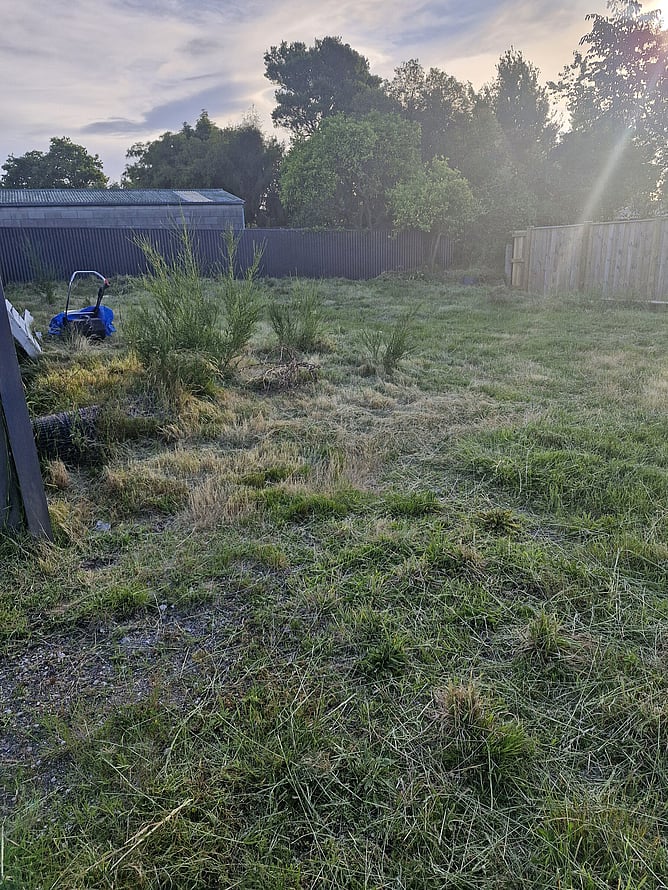
For the past few years we’ve had a very small section in Taupō waiting for us to build on it.
It’s modest — just enough land for a compact 71sqm two-bedroom home. The plan has always been to build something small, thoughtful, and efficient rather than large and extravagant.
But like many people building today, we’re feeling the squeeze.
Budgets are tight. Timeframes are shrinking. Costs keep moving.
So naturally we ask ourselves the question every builder eventually asks: What can we cut? The honest answer is: not much.
When money gets tight, something has to give. But for us there is one area that is off limits:
The high-performance, sustainability elements of the home.
We may adjust our ambitions slightly. Instead of aiming for Passive House Classic certification, we might step back to Passive House Low Energy.
But what we won’t do is simply build to code.
Why Building to Code Isn’t Good Enough
New Zealand’s building code sets the minimum legal standard.
But minimum standards are rarely what you would choose if you were designing a home purely for comfort, energy efficiency, and long-term performance.
I saw recently: “If you build to code, it’s the worst house you are legally allowed to build.
It’s a confronting statement — but there’s truth in it.
If we built this house purely to code, without properly modelling its energy use, we already know what would happen.
Taupō is not forgiving. Taupō winters are cold.
A code-minimum house here can easily end up under-heated and uncomfortable unless you constantly pump energy into it.
But the other side of the equation is summer.
Our section orientation means the house sits north–south, with the outdoor living area facing west. That’s wonderful for evening sun — but it also means the house could easily become a heat trap.
Without careful design — shading, insulation, glazing performance, ventilation — the house could become:
cold in winter
a hot box in summer
expensive to run all year round
Energy costs would climb as we tried to heat the house in winter and cool it in summer.
That doesn’t make sense economically or environmentally.
Small homes need to work harder. At 71sqm, this home will be compact.
Small homes magnify performance problems. Temperature swings happen faster, overheating happens quicker, and comfort matters more because there is nowhere to escape it.
Which is exactly why performance matters.
Good insulation.
Good windows.
Airtightness.
Ventilation.
These things are not luxuries — they’re the fundamentals that make a small home genuinely liveable.
A Question of Responsibility
There is also a bigger question that sits behind all of this. We want to contribute positively to the housing stock in New Zealand. If we knowingly build a house to the bare minimum standard, simply because that’s what the rules allow, are we really doing that?
Is it ethical to add a house that we already know will be inefficient, uncomfortable, and expensive to run? Or should we aim to build something that performs well for the next 50–100 years? For us, the answer is obvious.
The compromises will come elsewhere.
Interior finishes might be simpler.
Materials might be more modest.
Some design details may become less luxurious.
Those things can evolve over time.
But the performance of the building envelope — the bones of the house — must be right from the start.
Because once the walls are up, you’re living with those decisions for decades.
The Real Cost of Building Cheaply
A poorly performing house doesn’t stay cheap.
You pay for it later through:
higher energy bills
discomfort
retrofit fixes
maintenance
and environmental cost
A high-performance home costs more thought upfront — but far less regret later.
Why We Can’t Afford Not To
So when we look at the budget and ask what we can cut, the answer becomes clear.
We may trim finishes.
We may simplify details.
But we won’t compromise on building a high-performance, carbon-conscious home.
Because when you step back and think about it honestly:
We simply can’t afford not to.